


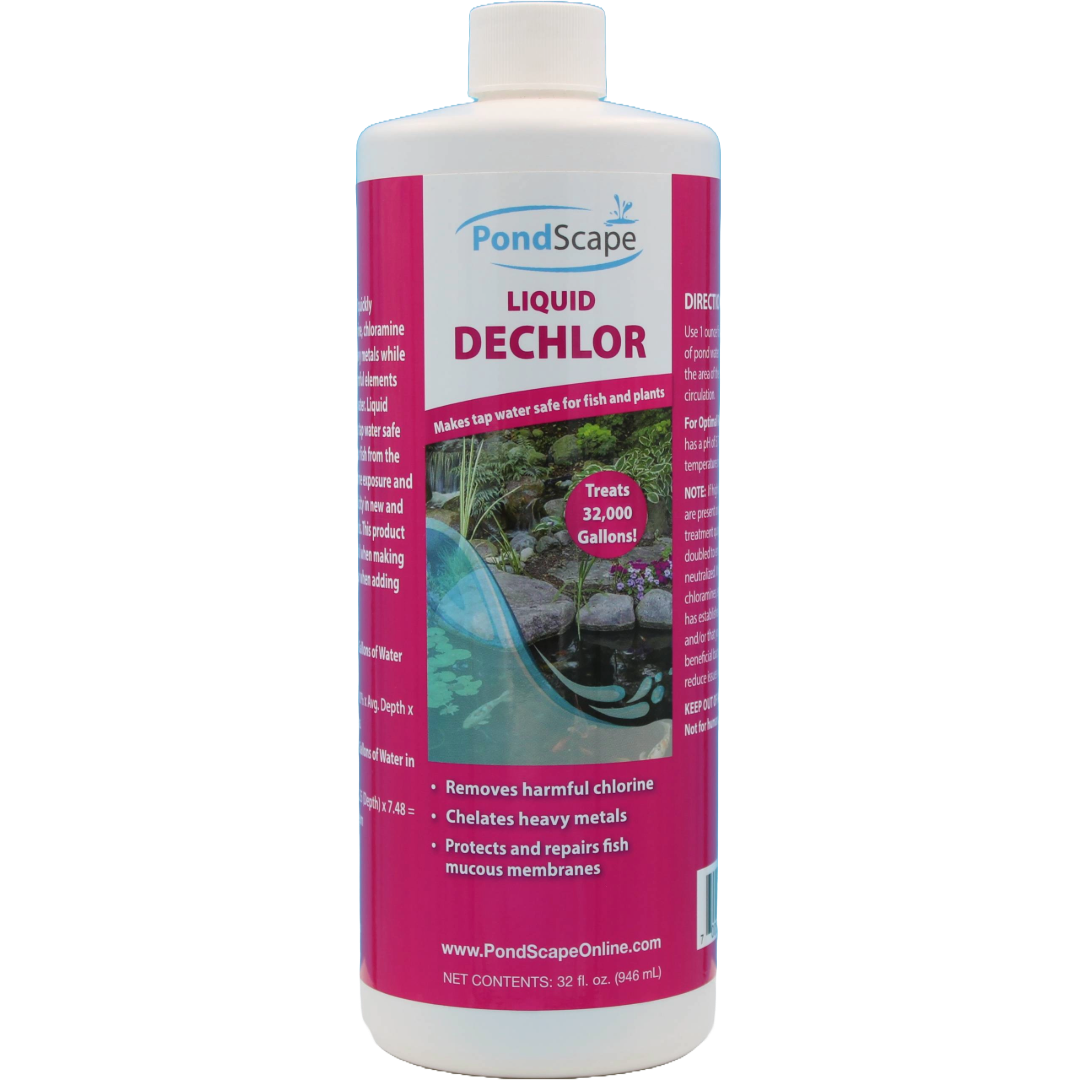




PondScape Liquid Dechlorinator
PondScape Liquid Dechlorinator makes tap water safe for your pond fish by quickly neutralizing harmful chlorine and chloramine while protecting fish from heavy metal toxicity. This essential water conditioner is a must-have for new pond setups, water changes, and when adding new fish to your pond.
What Liquid Dechlorinator Does:
- Quickly removes harmful chlorine and chloramine from tap water
- Chelates (binds) heavy metals like copper, lead, and zinc
- Protects and repairs fish mucous membranes (slime coat)
- Makes tap water safe for fish instantly
- Prevents chlorine burns and heavy metal poisoning
When to Use:
- Setting up a new pond
- Performing water changes or top-offs
- Adding new fish to your pond
- Anytime you add tap water to your pond
How to Use:
Add 1 ounce (30 ml) per 1,000 gallons of pond water. Use the graduated measuring chart on the side of the bottle for easy dosing. Apply the product in the area of your pond with the best circulation to ensure even distribution.
Dosing for Different Situations:
- Normal chlorine levels: Use standard dose of 1 oz per 1,000 gallons
- High chlorine or chloramine: Safely double the dose to 2 oz per 1,000 gallons to ensure complete neutralization
- When treating chloramine: Follow up with beneficial bacteria treatment to help process the ammonia that's released when chloramine breaks down
For Best Results:
- Water pH should be between 5.7 and 9.5
- Water temperature should be at least 48°F (9°C)
- Ensure your pond has established biological filtration when treating chloramine
How to Calculate Your Pond Volume:
- Pond: Length × Width × 80% × Average Depth × 7.48 = Total Gallons
- Stream: Length × Width × 0.25 (Depth) × 7.48 = Total Gallons
Example: A 10' × 8' pond with 2' average depth = 10 × 8 × 0.8 × 2 × 7.48 = approximately 958 gallons
Frequently Asked Questions
Q: Do I really need to use dechlorinator every time I add tap water?
A: Yes! Municipal tap water contains chlorine or chloramine to make it safe for humans, but these chemicals are toxic to fish and beneficial bacteria. Even small amounts can damage fish gills and mucous membranes. Always treat tap water with dechlorinator before adding it to your pond, even for small top-offs. It's a simple step that protects your fish investment.
Q: What's the difference between chlorine and chloramine, and why does it matter?
A: Chlorine is a single chemical that evaporates over time, while chloramine is a combination of chlorine and ammonia that doesn't evaporate and is more stable. Many municipalities have switched to chloramine. When dechlorinator breaks down chloramine, it releases ammonia into your pond. That's why it's important to have established biological filtration and follow up with beneficial bacteria when treating chloramine. If you're unsure what's in your water, contact your local water utility or double the dechlorinator dose to be safe.
Q: Can I add fish immediately after using dechlorinator?
A: Yes! Liquid Dechlorinator works instantly to neutralize chlorine and chloramine, making the water safe for fish right away. However, when adding new fish, it's still best practice to acclimate them slowly by floating the bag in your pond for 15-20 minutes to equalize temperature, then gradually mixing pond water into the bag over another 15-20 minutes before releasing them. This reduces stress from temperature and pH differences.